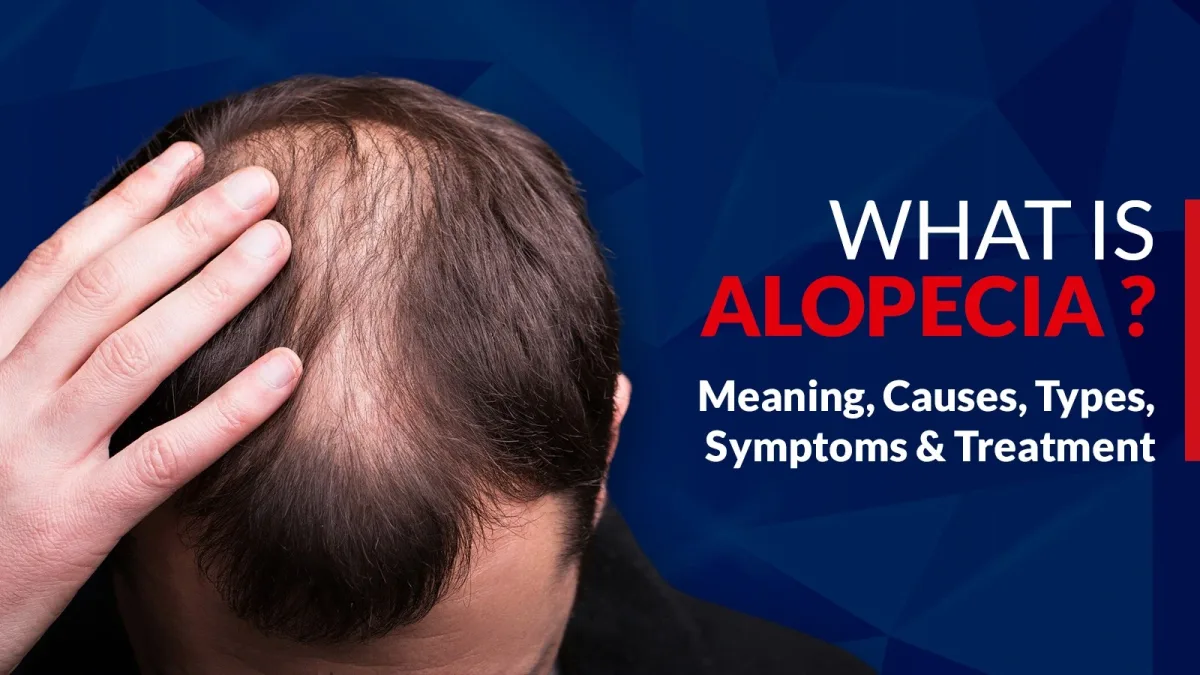
What is Alopecia? Meaning, Causes, Types, Symptoms & Treatment

Hair fall is something from which most of the people from this world suffer from. But hair loss is not normal, especially when your hair falls more than before and starts affecting the visible areas of the scalp or body. There is a hair fall problem called Alopecia which is a broad medical term used to describe abnormal hair loss that can occur on the scalp, face or other parts of the body. Every year almost 30 million people develop this condition and according to reports there are 2% chances of lifetime risk if it doesn't get treated at the right time.
This condition affects people of all ages & genders that can range from mild thinning to complete hair loss. Understanding the meaning of alopecia, identifying its causes, recognizing early symptoms & getting knowledge of appropriate alopecia treatment options are crucial steps toward effective management.
Alopecia Meaning and Overview
Alopecia is a common word for a variety of hair loss conditions compared to a specific one. Depending on the kind, alopecia can vary greatly in severity, pattern, causes & ability to heal. While certain kinds can be chronic or permanent, others are temporary & reversible. People who have an extensive understanding of alopecia are better able to make decisions regarding diagnosis, treatment & lifestyle modifications.
What Is Alopecia?
It's very important to differentiate alopecia from normal hair loss for people to fully understand what alopecia is. Persistent, patterned, patchy or progressive hair loss that separates from the typical cycle of growth of hair is commonly referred to as alopecia. The scalp, eyebrows, beard, arms, legs or the entire body can be affected. Autoimmune attacks, hormonal imbalances, genetics, stress or physical injury to hair follicles can all cause alopecia.
Key points about alopecia:
Meaning of alopecia refers to partial or complete hair loss
It can affect scalp hair, facial hair or body hair
Alopecia disease includes autoimmune & non-autoimmune forms
Alopecia Disease Explained
Alopecia disease is a medical condition in which damages the immune system, damages or attacks hair follicles. Alopecia is caused by deep biological or pathological causes unlike cosmetic hair loss which can be caused by reaction of any hair product usage. Alopecia areata, androgenic alopecia & scarring of the scalp are among the commonly recognized medical conditions that need to be properly diagnosed & treated.
Alopecia Hair Loss vs Normal Hair Fall
Normal hair fall happens when we usually comb and there are some 5 to 6 hair strands which are a part of the natural hair cycle. When your hair starts to fall excessively showing your scalp and more than normal hair fall while showing some kind of pattern & patchy spots. The duration, intensity & regrowth are where the differences become apparent. Alopecia can cause hair to fall out or not grow back properly or come back weaker & thinner.
How alopecia hair fall differs:
Random or progressive hair thinning
Patchy bald spots or widening hair lines
Hair loss from unusual areas like beard or arms
Alopecia Causes
Understanding the cause of any condition is important to get the right and proper treatment. Due to treating the root cause of alopecia makes a difference to its effectiveness, understanding its causes is essential. Hormonal, genetic, autoimmune, mechanical, dietary or emotional causes can all cause alopecia. Personalized diagnosis is especially important since many factors often interact.
Alopecia Causes in Females
Alopecia causes in females is frequently caused by a variety of complicated factors, including hormonal changes, dietary inadequacies, mental stress & health issues. Proper identification is difficult since women can have irregular thinning instead of whole bald areas.
Common causes in females include:
Hormonal imbalance (PCOS, menopause, thyroid disorders)
Iron-deficiency anemia
Post-pregnancy hair loss
Autoimmune Causes of Alopecia Areata
Autoimmune is one of the main causes of alopecia areata. There can be random hair loss in a patchy pattern creating bald spots on the scalp which can be caused by the immune system where it starts to attack the healthy hair follicles mistakenly. This condition can progress unpredictably.
Autoimmune features include:
Sudden round bald patches
No scarring or pain
Possible regrowth with texture changes
Association with other autoimmune disorders
Genetic Causes of Androgenic Alopecia
One of the most common types of alopecia hair loss is androgenic alopecia, which is caused by a strong family history & hormonal effect. This medical condition has a strong connection with the body's reaction to androgens, especially dihydrotestosterone (DHT) & is inherited from genetics. This disorder is known as androgenetic alopecia male in men & typically appears as a thinning forehead or decreasing hairline while in women, it appears as extensive thinning over the scalp.
Genetic factors involve:
Sensitivity to dihydrotestosterone (DHT)
Family history of hair thinning
Slow shrinking of hair follicle
Traction and Lifestyle-Related Alopecia Causes
Constant physical tension on the hair & scalp continuously is the cause of traction and lifestyle-related alopecia. Traction alopecia, in comparison with autoimmune or hereditary types occurs due to physical damage to hair follicles & which usually goes undiagnosed until hair loss becomes evident. Cosmetic treatments, daily routines & grooming techniques can all slowly damage follicles & interfere with normal cycles of hair development. Timely lifestyle changes are essential since traction alopecia can develop from sudden hair loss to chronic follicle damage if left untreated.
Contributing factors include:
Tight braids, ponytails or buns
Styling with excessive heat
Chemical treatments
Poor scalp hygiene
Types of Alopecia
Alopecia is a general word used to describe many patterns & causes of hair loss compared to an individual disorder. Depending on whether the hair loss is autoimmune, hereditary, mechanical, inflammatory or systemic, there are many types of alopecia. If individuals delay treatment, particular kinds could end up in permanent follicle damage, while others cause temporary hair loss with a significant chance of regrowth. Because each kind of alopecia acts differently, advances at a different rate & responds differently to therapy, it is essential to understand the many different kinds. Correct diagnosis provides achievable goals for recovery & helps prevent costly treatments. The most common kinds of alopecia are listed below, each having unique characteristics, causes & consequences.
Alopecia Areata
An autoimmune condition type of hair loss called alopecia areata happens when the immune system accidentally attacks healthy hair follicles. On the scalp or other body areas, this causes unexpected, prominent patches of hair loss. Regrowth is possible since the follicles are still alive despite the obvious loss of hair. This type of hair loss can occur unexpectedly and it can be caused due to genetic risk, infections or mental stress. Some people can have constant patches or progress, while others can have a single episode with full regrowth.
Key characteristics of alopecia areata include:
Sudden round or oval bald patches
Smooth scalp skin without scarring
Possible tingling or itching before hair loss
Androgenic Alopecia (Androgenetic Alopecia Male)
The most common type of hair loss is androgenic alopecia, which is mostly caused by hormones & genetics. It is referred to as androgenetic alopecia male in males & typically begins with thinning at the crown or a hairline that recedes. Hair slowly stops growing & gets shorter & thinner over time. Early management is crucial to slowing hair loss & maintaining existing hair given that androgenic alopecia increases slowly but in stages.
Alopecia Universalis
A severe & advanced type of alopecia areata is called alopecia universalis. The entire body, including the scalp, suffers total hair loss with this disorder. This includes the loss of body hair, beard hair, eyelashes & eyebrows. All hair follicles can be impacted by broad autoimmune activity, which causes alopecia universalis. The immune system restriction on hair development is common, even when the follicles are not damaged. Because hair loss is fast & complete, the disorder can have a major mental & emotional impact. Instead of promoting immediate regrowth, treatment focuses on sustained treatment, emotional support & immune system regulation.
This type involves loss of:
Scalp hair
Eyebrows & eyelashes
Beard hair
Body hair
Scarring Alopecia
The inflammation continuously kills hair follicles & grows back them with tissue that scars in scarring alopecia which is a severe kind of hair loss. Regrowth is impossible after follicular damage compared to non-scarring alopecia. This kind could be associated with inflammatory scalp disorders, infection or autoimmune conditions. Before significant hair loss develops, scarring alopecia frequently causes symptoms including itching, burning, discomfort or redness. Diagnosing the condition early helps in stopping the progression & protects the remaining hair.
Key features include:
Shiny or smooth bald patches
Absence of hair follicles
Pain, itching or inflammation
Permanent hair loss
Moth Eaten Alopecia
Moth-eaten alopecia is an illness marked by random, patchy hair loss that resembles cloth chewed by moths. This pattern is frequently associated with underlying chronic conditions including ongoing infections or autoimmune illnesses. The patches are mismatched & more distinct than those of alopecia areata. A medical diagnosis is crucial because moth-eaten alopecia typically indicates that hair loss is a related symptom of a more serious health problem. The secret to curing this kind of alopecia is to deal with the underlying cause.
Distinct features include:
Irregular & uneven hair loss patches
Poorly defined borders
Association with systemic illness
Requires deep evaluation
Alopecia Symptoms
Alopecia is a disease where its symptoms can differ on the basis of severity, kind, causes and what stage you are suffering with in hair loss. While hair loss is the primary & most obvious symptom, alopecia is frequently associated with other physical & problems related to scalp that help differentiate it from regular or periodic shedding . While some symptoms occur unexpectedly & get worse quickly, others grow slowly. The early identification of alopecia signs is extremely important due to a correct diagnosis that can improve treatment results & stop more harm from occurring to the follicles that produce hair. The symptoms of alopecia can affect several things including your scalp, beard, eyebrows or even body hair & in several cases, scalp pain or inflammation could appear before obvious hair loss.
Common Alopecia Symptoms
Extreme hair loss that is higher than normal daily falling is one of the most severe signs of alopecia. People can notice excessive hair loss on pillows, clothes or when combing or washing. Differences in scalp sensations like itching, tenderness or mild burning sensations frequently occur alongside hair loss. When your hair starts to fall due to alopecia it is more likely to last longer & can become worse with time. Different immune systems or hormonal characteristics with the root cause of alopecia can all affect how severe the symptoms of an individual are.
Alopecia Treatment Options
Alopecia is a disease which needs proper care and treatment which shows efficient results. It is very crucial to get the treatment at the right time and from the right place while looking after what kind and type you have. Alopecia is not a disease but a symptom which is caused by several reasons in your body. In this condition individuals should always look for personalized treatment which looks after every sign, cause associated with it. An comprehensive alopecia treatment plan mostly combines medical care & supportive therapies to address both symptoms & root causes.
Alopecia Treatment (Medical & Clinical)
The primary objectives of medical & clinical alopecia treatment are to boost hair follicles, reduce inflammation & deal with hormonal imbalances in the body. Treatment of alopecia is often prescribed on the basis of what a medical investigation suggests or diagnostic tests used to identify the type of the disease The goal of medical treatment for autoimmune medical conditions like alopecia areata is to prevent the immune system from destroying hair follicles. Treatment for hormonal or hereditary hair loss focuses on regrowth & follicle sensitivity. Regular evaluation is important for clinical therapies since variations in response & accuracy affect the outcomes.
Androgenic Alopecia Treatment approaches include:
Hormonal modulation therapies
Scalp treatments for strengthening the hair follicles
Maintenance plans to give you lasting relief
Lifestyle changes supporting hormonal balance
Homeopathic Treatment include:
Personalized treatment option
Immune & hormonal balance support
Stress & emotional health management
Results that lasts long with no recurrence of symptoms
Effective Home Care Practices Include:
Planned routine for scalp cleaning
Avoiding tight hairstyles & heat damage
Balanced, nutrient-rich diet
Stress reduction techniques
Living With Alopecia
Being that hair loss commonly affects relationships with others, confidence & appearance, living with alopecia can be both mentally & physically stressful. This condition affects everyday life & individuals relationships because alopecia hampers the appearance which encourages confidence. While treating this disease you have to look for effective treatment that needs a good knowledge of alopecia with setting achievable goals & supportive ways to deal with it. Alopecia is a condition which can be temporary or permanent based on the severity and type but improving your lifestyle, getting help on the right time & continuing to a proper treatment plan can help you get a good result and better management.
Conclusion
A disease which affects millions of people globally is alopecia that can happen due to genetic, autoimmune, hormonal or environmental causes. To choose the best alopecia therapy & stop excessive hair loss, it is essential that you understand the particular form of alopecia & identify early warning signs. A personalized strategy & immediate diagnosis are vital since alopecia hair loss & fall symptoms vary from person to person.
Alopecia growth can usually be maintained & hair health increased with the correct combination of medical treatment, lifestyle support & choices like natural or homeopathic medicine. Although not all types of alopecia are completely curable, early & regular therapy can protect remaining hair, reduce hair loss & give people the confidence to manage their disease.
Frequently Asked Questions
What is the cause of alopecia?
Leave a Comment
Your email address will not be published. Your comment will be visible after admin approval.
Comments
Loading comments...