Homeopathy vs Allopathy: Which Treatment Is Better?

There are several kinds of treatments around the world but the most debatable is homeopathy vs allopathy has been ongoing for a long time. Patients are mostly confused about which treatment system is better for their health. While allopathy focuses on relieving the symptoms rapidly through scientifically tested medicines, homeopathy puts more focus on personalized care and long-term balance. Understanding the differences between these two systems helps patients make informed decisions based on their condition, severity of illness and personal health goals. This article explores the key differences, benefits, limitations, and practical considerations in the comparison of homeopathy vs allopathy.
Homeopathy vs Allopathy
When comparing homeopathy vs allopathy, it is important to understand that both systems of medicine are based on very different philosophies and treatment approaches. Allopathy, also known as conventional or modern medicine, focuses on diagnosing disease through clinical tests and treating it with evidence-based drugs, surgery, or procedures. Homeopathy, on the other hand, works on the principle of stimulating the body’s natural healing response through highly individualized remedies. The difference between homeopathy vs allopathy is not just about medicines, but about how each system understands disease, symptoms, and recovery.
Understanding the Difference Between Homeopathy and Allopathy
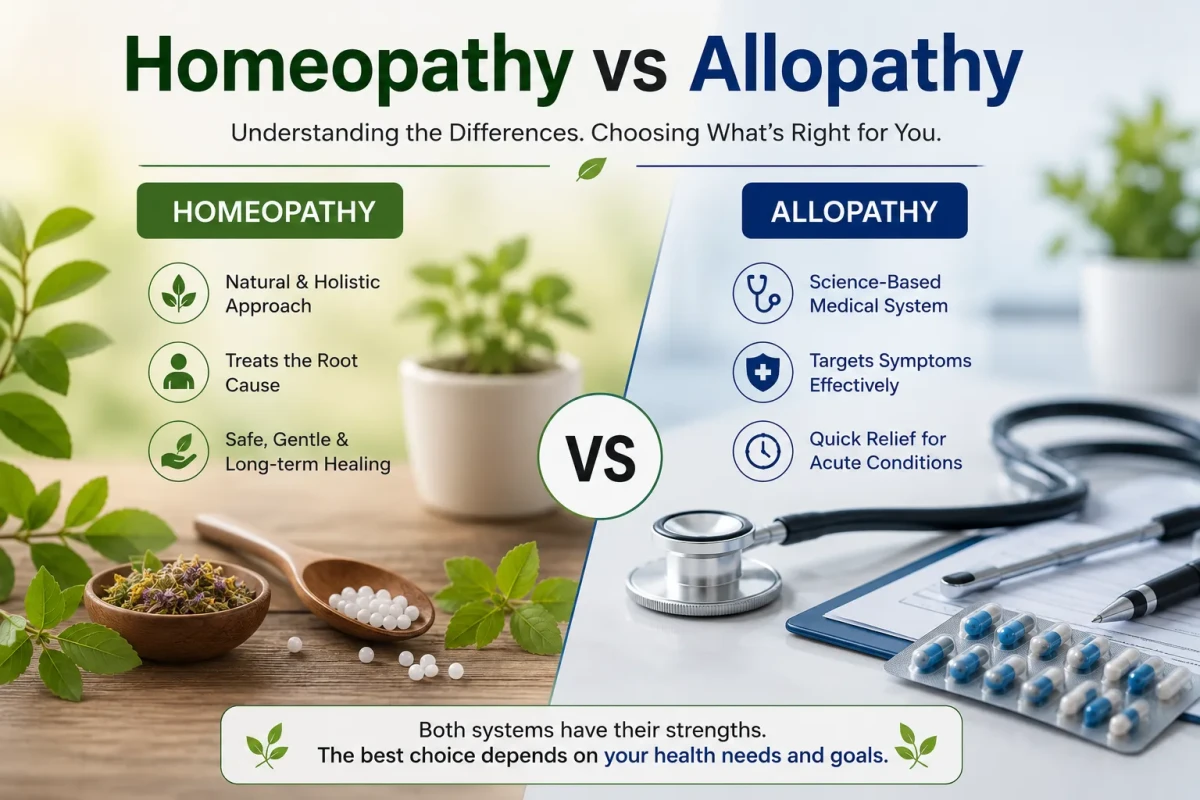
Homeopathy vs allopathy differs in philosophy, diagnosis, and treatment goals. While both aim to improve health, their methods and healing perspectives are distinct.
Approach to disease and symptoms: Allopathy primarily targets the disease process or specific symptoms, often providing quick relief. Homeopathy focuses on identifying the underlying imbalance causing the symptoms and aims for gradual, long-term correction.
Treatment methodology: In allopathy, medicines are prescribed based on diagnosis and clinical guidelines, often the same for patients with similar conditions. In homeopathy, remedies are selected individually based on physical, emotional, and mental symptoms unique to each patient.
Goal of healing: Allopathy emphasizes symptom control, emergency care, and measurable biological outcomes. Homeopathy emphasizes holistic balance, strengthening immunity, and supporting the body’s natural healing capacity over time.
What Is Allopathy?
In the ongoing discussion of homeopathy vs allopathy, understanding allopathy is equally important. Allopathy refers to the conventional system of modern medicine practiced worldwide. It is based on scientific research, clinical trials, and measurable biological evidence. Allopathic treatment focuses primarily on diagnosing diseases through tests and medical evaluation, then managing them with medicines, surgery, or other therapeutic interventions. When comparing homeopathy vs allopathy, this system is often recognized for its fast action, structured protocols, and evidence-based emergency care.
How Allopathic Medicine Works
Allopathic medicine works by targeting the disease mechanism directly, often through pharmacological or surgical intervention. Its approach in the homeopathy vs allopathy debate is more symptom-focused and disease-specific.
Use of Active Chemical Drugs: Allopathy uses medicines containing measurable chemical compounds that act on specific biological pathways to reduce symptoms or eliminate infection and inflammation.
Symptom Suppression and Disease Control: Treatment often aims to quickly relieve pain, fever, infection, or inflammation. In chronic diseases, long-term medication may be used to control the condition.
Diagnostic and Evidence-Based Approach: Blood tests, imaging scans, and clinical trials form the backbone of allopathic practice. Treatments are standardized based on large-scale research and established guidelines.
Difference Between Homeopathy and Allopathy
When discussing homeopathy vs allopathy, the real comparison lies in their philosophy, preparation of medicines, and overall treatment goals. Both systems aim to improve patient health, yet their methods are fundamentally different. Allopathy relies on pharmacological intervention and measurable biological mechanisms, while homeopathy follows a principle of individualized healing and symptom similarity. Understanding these distinctions helps patients make informed decisions rather than viewing the two systems as direct competitors.
Treatment Approach
The treatment approach is one of the most significant differences in the homeopathy vs allopathy discussion.
Individualized vs Standardized Care: Homeopathy selects remedies based on a person’s unique symptom pattern, emotional state, and overall constitution. Allopathy generally follows standardized protocols based on diagnosis.
Holistic vs Disease-Centered Focus: Homeopathy treats the person as a whole, considering mind and body together. Allopathy primarily targets the diagnosed disease or affected organ system.
Long-Term Regulation vs Immediate Control: Homeopathy aims for gradual internal balance and long-term improvement. Allopathy often focuses on faster symptom control, especially in acute conditions.
Type of Medicines Used
Another important distinction in homeopathy vs allopathy lies in the nature of medicines prescribed.
Highly Diluted Remedies in Homeopathy: Homeopathic medicines are prepared through serial dilution and potentization, using natural substances in minimal doses.
Chemically Active Drugs in Allopathy: Allopathic medicines contain measurable active ingredients designed to produce specific biochemical effects in the body.
Dosage and Administration Differences: Homeopathic remedies are usually given in small pellets or liquid drops. Allopathic medicines may include tablets, capsules, injections, or infusions depending on the condition.
Focus on Symptoms vs Root Cause
The debate around homeopathy vs allopathy often centers on whether treatment focuses only on symptoms or deeper causes.
Root Cause Perspective in Homeopathy: Homeopathy attempts to identify underlying susceptibility or imbalance that leads to recurring illness.
Symptom-Based Management in Allopathy: Allopathy frequently prioritizes relieving observable symptoms while controlling disease progression.
Approach to Chronic Conditions: In chronic diseases, homeopathy seeks gradual constitutional change, while allopathy may rely on ongoing medication to manage symptoms and prevent complications.
Homeopathy vs Allopathy: Safety Comparison
Safety is one of the most important factors people consider when choosing between homeopathy vs allopathy. While both systems aim to treat illness and improve quality of life, their safety profiles differ significantly due to the nature of medicines used and how they act in the body. Allopathy relies on chemically active drugs that act quickly but may cause side effects, especially with long-term use. Homeopathy, on the other hand, uses highly diluted remedies and follows a gentle, non-suppressive approach. Understanding these safety differences helps patients make informed choices based on their health condition, age, and treatment duration.
Side Effects of Homeopathy
Homeopathy is generally known for its mild action and low risk of adverse effects when prescribed correctly.
Minimal risk of toxicity: Homeopathic medicines are highly diluted, which significantly reduces the chances of chemical toxicity or organ damage.
Rare and mild reactions: Any initial symptom changes are usually temporary and part of the body’s healing response rather than harmful side effects.
Suitable for long-term use: Because remedies are non-addictive and gentle, homeopathy is often considered safe for chronic conditions requiring prolonged treatment.
Side Effects of Allopathy
Allopathic medicines are effective and fast-acting but may carry side effects depending on the drug, dosage, and duration of use.
Chemical-related side effects: Long-term or high-dose use can affect organs such as the liver, kidneys, or stomach in some patients.
Risk of dependency or tolerance: Certain medications, especially painkillers, sedatives, or steroids, may lead to dependency or reduced effectiveness over time.
Need for careful monitoring: Regular tests and medical supervision are often required to manage side effects and prevent complications during prolonged treatment.
Homeopathy vs Allopathy for Chronic Diseases
Chronic diseases such as diabetes, thyroid disorders, asthma, arthritis, and skin conditions require long-term care rather than temporary relief. In the discussion of homeopathy vs allopathy, chronic illness management becomes a key comparison point. Allopathy focuses on controlling disease progression and preventing complications through ongoing medication and monitoring. Homeopathy, on the other hand, emphasizes restoring internal balance and reducing recurrence over time. The choice often depends on the severity of the condition, patient preference, and whether integrative care is considered.
Role of Homeopathy in Chronic Conditions
Homeopathy is commonly sought for long-standing illnesses where patients look for sustainable and holistic improvement rather than only symptom control.
Individualized long-term care: Remedies are selected based on a person’s physical, emotional, and lifestyle factors, aiming to correct the underlying imbalance contributing to chronic disease.
Focus on reducing recurrence: Homeopathy attempts to lower the frequency and intensity of flare-ups in conditions like eczema, migraines, allergies, and hormonal disorders.
Support for overall immunity and vitality: Treatment aims to strengthen the body’s adaptive capacity, potentially reducing dependency on repeated short-term interventions.
Role of Allopathy in Chronic Conditions
Allopathy plays a central role in managing chronic diseases, especially when the condition involves measurable biochemical changes or risk of serious complications.
Disease control and monitoring: Regular tests and evidence-based protocols help control blood sugar, blood pressure, thyroid levels, or inflammatory markers to prevent long-term damage.
Prevention of complications: Allopathic medicines are designed to reduce risks such as organ failure, stroke, or cardiovascular events in chronic conditions.
Standardized treatment protocols: Guidelines based on clinical research ensure consistent management across patients with similar diagnoses.
Combining Homeopathy and Allopathy
In today’s healthcare landscape, many patients no longer rely on a single system of medicine. Instead, they explore an integrative approach that combines the strengths of different treatment methods. When discussing homeopathy vs allopathy, it is important to understand that these two systems do not always have to be mutually exclusive. In many cases, they can be used together in a complementary manner. Combining homeopathy and allopathy may help patients manage symptoms effectively while also supporting long-term balance and overall well-being, especially in chronic or lifestyle-related conditions .
Is It Safe to Use Both Together?
Using homeopathy and allopathy together is generally considered safe when done correctly and under supervision.
Different modes of action: Homeopathic remedies work by stimulating the body’s natural healing response, while allopathic medicines act chemically on specific disease mechanisms, reducing the risk of direct interference.
Supportive role of homeopathy: Homeopathy is often used to support recovery, reduce symptom burden, or improve quality of life alongside conventional treatment.
Widely practiced integrative care: Many patients already follow this combined approach, particularly for chronic conditions, with positive outcomes when properly managed.
Importance of Medical Guidance
Professional guidance is essential to ensure safety and effectiveness when combining treatment systems.
Avoiding treatment conflicts: A qualified doctor can ensure that both systems complement each other without reducing effectiveness or delaying necessary care.
Correct timing and dosage: Medical supervision helps determine when and how remedies should be taken to achieve the best results.
Holistic and safe care planning: Coordinated guidance ensures that acute conditions, emergencies, or disease progression are handled appropriately while maintaining long-term health goals.
Which Is Better: Homeopathy or Allopathy?
The question of which is better in the debate of homeopathy vs allopathy does not have a one-size-fits-all answer. Both systems serve important roles in healthcare, and their effectiveness depends largely on the type, severity, and stage of the condition. Allopathy is often preferred in emergencies, acute infections, and life-threatening diseases due to its rapid and scientifically validated interventions. Homeopathy, on the other hand, is frequently chosen for chronic, recurring, or lifestyle-related conditions where a gentle, individualized approach is desired. The “better” choice depends on context, patient preference, and medical necessity.
Choosing the Right Treatment Based on Condition
Selecting between homeopathy vs allopathy should be guided by the nature of the illness and treatment goals.
Acute and emergency conditions: For severe infections, injuries, surgical needs, or life-threatening illnesses, allopathy is generally the safer and more effective choice due to its immediate action and advanced medical infrastructure.
Chronic and recurrent conditions: In long-term issues like allergies, migraines, hormonal imbalances, or skin disorders, homeopathy may be considered for gradual, holistic improvement.
Personal health priorities: Some patients prioritize rapid symptom relief, while others prefer minimal medication and long-term balance. The decision should be made with proper medical advice and a clear understanding of both systems.
Leave a Comment
Your email address will not be published. Your comment will be visible after admin approval.
Comments
Loading comments...